Mole Hills in Clitheroe? 2026 Breeding Season Guide

Severe Rat Infestation in a Blackburn Garden
A Royal Wake Up: What Clitheroe residents need to know about Wasps This Spring
As the frost begins to clear from the Ribble Valley and temperatures in East Lancashire consistently hit that 10°C mark, a natural phenomenon begins: the awakening of the Queen Wasp.
If you’ve recently spotted an unusually large wasp in your loft, shed, or window frame, you haven't found a "mutant" or a leftover from last year. You’ve met a potential colony founder. At Wallace Pest Control, we want to help you identify these royal visitors and understand why they are appearing in your home right now.
How to Identify a Queen Wasp
In the UK, you are most likely dealing with the Common Wasp (Vespula vulgaris) or the German Wasp (Vespula germanica).
- Size: This is the biggest giveaway. A queen is significantly larger than the workers you see in summer, often reaching 20mm to 25mm in length.
- The Face Test:
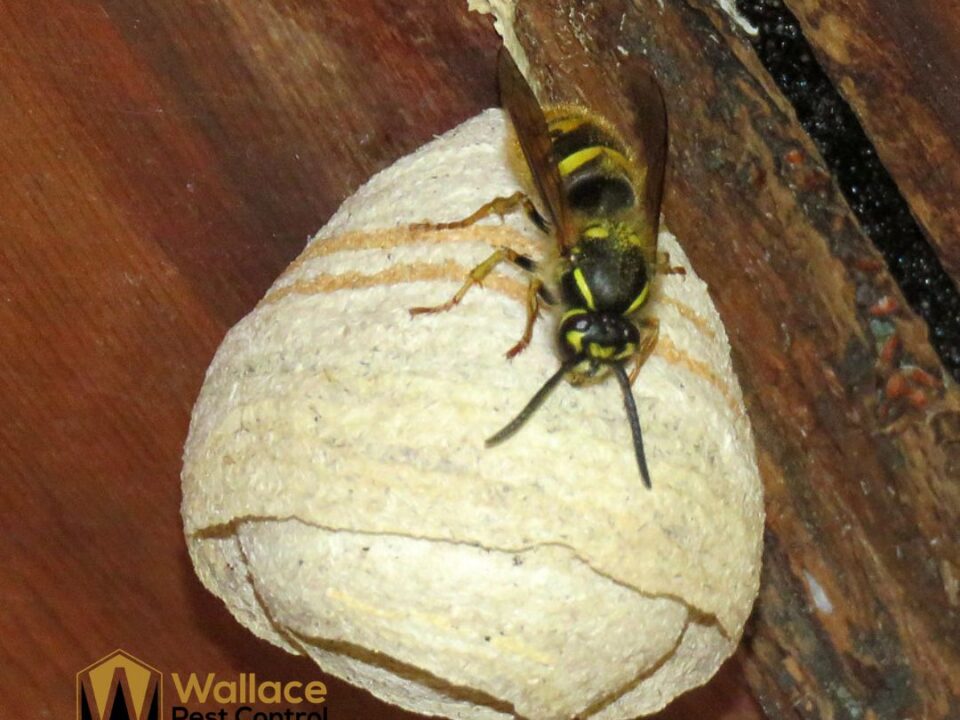
- Common Wasp: Look for an "anchor" or "dagger" shaped black mark on its face.
- German Wasp: These usually have three tiny black dots on their face.
- The Sound: Their buzz is much deeper and louder—it’s often mistaken for a hornet.

The Lifecycle: Why is she alone?
Unlike most insects, a wasp colony does not survive the British winter. In late autumn, the old queen and all her workers die off. Only the newly mated queens survive.
The Winter Sleep (Hibernation):
The queen finds a dry, frost-protected spot—often under bark, in log piles, or inside East Lancashire lofts and wall cavities. She enters a state called diapause, tucking her wings under her body to stay compact and conserve energy. She is the "biological blueprint" for the entire next generation.

What happens when they wake up?
When the spring sun warms up, the queen emerges with one goal: founding a new empire.
- Feeding: She immediately seeks out nectar to replenish her energy.
- Scouting: She looks for a nesting site. Popular spots in our area include garden sheds, bird boxes, and the eaves of houses.
- Building: She builds a small, golf-ball-sized "petiole" nest made of chewed wood pulp.
- Egg Laying: She lays her first few eggs. Once these hatch into "workers," the queen will never leave the nest again, spending the rest of her life as a full-time egg layer.

What should you do if you find a Queen Wasp in your house?
Finding a lone queen in your bedroom or loft in Spring can be startling.
- Don't Panic: At this stage, she is solitary and generally less aggressive than a full summer colony. She is just looking for a way out or a place to build.
- The Glass and Card Method: If she is sluggish, you can safely relocate her outside.
- Check for Nests: If you see her repeatedly entering a hole in your masonry or roofline, she may be starting a nest.
- Call the Professionals: While a single queen is manageable, a nest in a wall cavity can quickly grow to house 5,000+ wasps by July.

Professional Wasp Control in Clitheroe & East Lancashire
Early intervention is key. If you are concerned about wasps starting a nest on your property, Wallace Pest Control offers expert wasp nest removal across Clitheroe, Whalley, Blackburn, and Burnley.
We understand the local landscape and provide discreet, effective treatments to ensure your home remains wasp-free this summer.
Worried about a potential wasp nest starting in your home?
Contact us for a free quote or a property inspection.
Call Now On: 07496680879