Know First, Treat Smart: Pest Survey Service Explained
Your Common Wasp FAQs UK
How Much Does Wasp Nest Removal Cost?
If you have found a wasp nest at your home or business, one of the first questions is usually how much it will cost to get it treated. The answer depends on whether the nest is active, where it is located and whether specialist access is needed.
For most standard wasp nest treatments, Wallace Pest Control charges £90. This includes a single visit treatment and a free retreatment if the nest is still active after 48 hours.
Inactive nest removal starts from £60, but in many cases the old nest does not need to be physically removed once the wasps have been treated and the activity has stopped.
If you are seeing wasps regularly entering and leaving the same gap, roofline, wall cavity, shed, bush or loft space, it may indicate an active nest. Professional treatment is usually the safest option, as wasps can become aggressive if the nest is disturbed.
For fast advice, call Wallace Pest Control on 07496 680879, or visit our wasp nest removal page for more information about the treatment process.
Wasp Nest Removal Prices
| Service | Price | What’s Included |
|---|---|---|
| Active wasp nest treatment | £90 | Single visit treatment, with a free retreatment if the nest is still active after 48 hours. |
| Inactive nest removal | From £60 | Physical removal of an inactive nest where access is safe, practical and necessary. |
| Insect identification call-out | £60 | Identification where you are unsure whether the insects are wasps, bees, bumblebees or another species. |
Prices can vary where there are multiple nests, unusual access requirements or commercial pest control needs. You can also view our pest control prices page for more information.

Why Does Wasp Nest Removal Cost Vary?
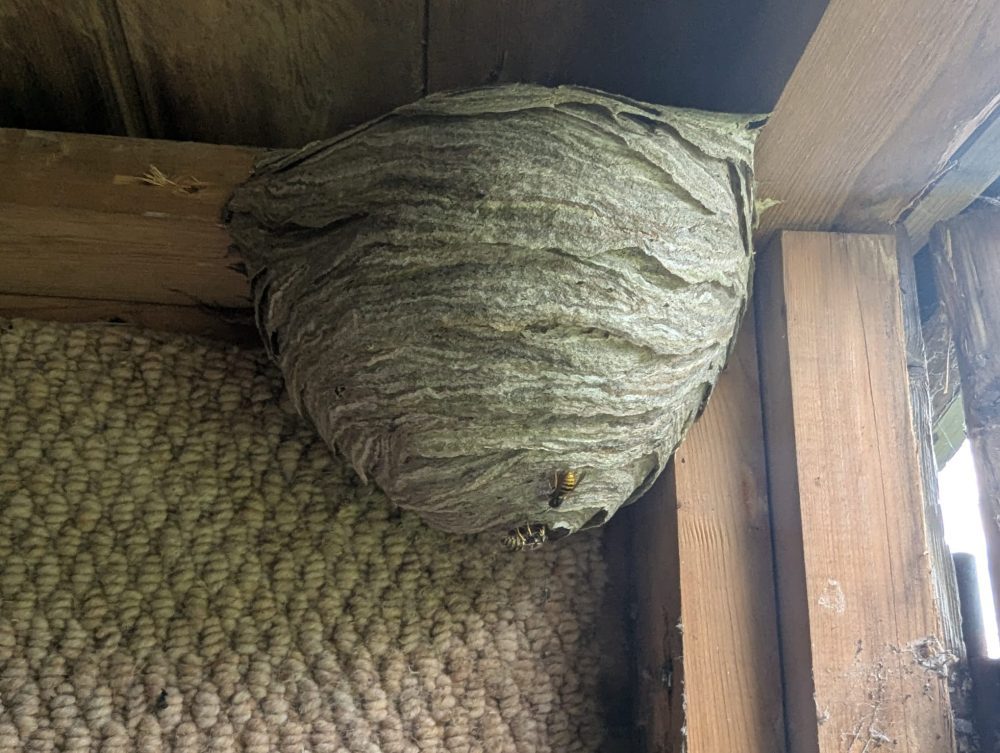
The cost of wasp nest removal can vary depending on the type of property, the location of the nest and how easy it is to access safely. A straightforward nest in a shed, loft or roofline will usually be quicker to treat than a nest in a difficult, restricted or high-risk area.
When comparing wasp nest treatment prices, it is important to check what is included in the service. A lower price may not always include professional equipment, insurance, experience, aftercare advice or a return visit if the nest remains active.
Common factors that can affect the cost include:
- Nest location: nests in lofts, wall cavities, roof spaces, sheds, bushes or high areas may require different treatment methods.
- Access: difficult or restricted access can affect how long the job takes and what equipment is needed.
- Active or inactive nest: an active nest usually needs treatment, while an old inactive nest may only need physical removal if it is safe and necessary.
- Residential or commercial property: businesses, public areas and larger sites may need additional risk assessment or scheduling.
- Number of nests: some properties may have more than one active nest.
- Aftercare: a professional service should explain what to expect after treatment and what to do if wasp activity continues.
Wallace Pest Control keeps pricing clear. Our standard active wasp nest treatment is £90, including a free retreatment if the nest is still active after 48 hours. Inactive nest removal starts from £60, where removal is safe, practical and required.
For more information about the treatment process, visit our wasp nest removal service page. You can also view our pest control prices for other common pest treatments.
Do you need the wasp nest removed after treatment?
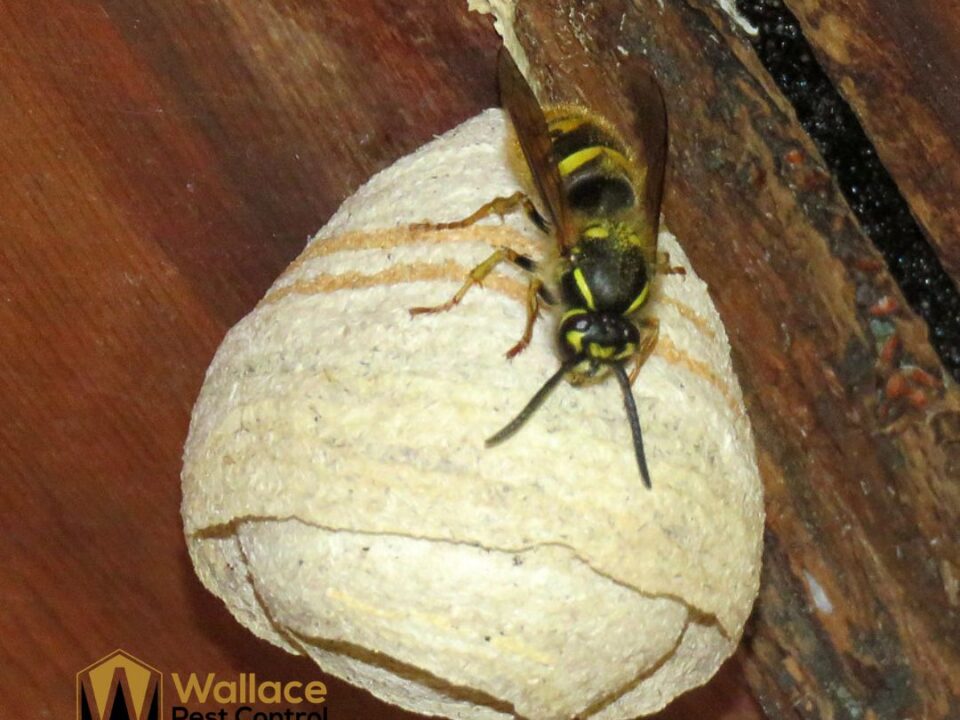
In many cases, a wasp nest does not need to be physically removed once it has been professionally treated and all activity has stopped. The treatment is designed to deal with the active wasps, and an old nest is not normally reused once the colony has died off.
Physical nest removal may be useful where the nest is accessible, unsightly, causing concern, blocking access or located in an area that needs to be cleared. However, removing a treated nest is not always necessary and should not be added automatically if there is no practical reason to do it.
This is one reason wasp nest removal costs can vary between companies. Some quotes may include treatment only, while others may include physical removal, difficult access, commercial scheduling or additional aftercare. Before booking, it is worth checking exactly what is included.
Wallace Pest Control offers standard active wasp nest treatment from £90, with inactive nest removal available from £60 where removal is safe, practical and required.
For more details about the treatment itself, visit our wasp nest removal service page.
What’s Included in Our £90 Wasp Nest Treatment?
Our standard active wasp nest treatment is £90 and includes professional treatment of a wasp nest at your home or business, along with clear advice on what to expect afterwards.
Before treatment, we assess the wasp activity, look at where the nest is likely to be located and decide on the safest and most suitable treatment method. Nests may be found in lofts, roof spaces, wall cavities, sheds, bushes, outbuildings or other awkward areas.
The price includes:
- Assessment of the wasp activity: we check where wasps are entering, leaving or gathering.
- Professional treatment: the nest is treated using suitable pest control equipment and products.
- Safe working practices: we use appropriate protective equipment and avoid unnecessary disturbance of the nest.
- Aftercare advice: we explain what you may see after treatment and how long activity may continue.
- Free retreatment if required: if the nest is still active after 48 hours, we will return and retreat it at no extra cost.
In most cases, you do not need to remove the nest physically once treatment has worked. If you would like an inactive nest removed afterwards, this can usually be arranged from £60 where access is safe and practical.
For more information about the service, visit our wasp nest removal page or call 07496 680879 for advice.
What am I actually paying? And what is involved in getting rid of wasps?
Professional wasp nest treatment is not just the cost of applying a product to a nest. The price also covers the inspection, equipment, protective clothing, treatment method, experience, insurance and aftercare advice needed to carry out the job safely.
Wasps can become aggressive when a nest is disturbed, so safety is one of the main reasons to use a professional pest controller. The nest may be in a loft, roofline, wall cavity, hedge, shed, outbuilding or high-level area, and each situation needs to be assessed before treatment.
With Wallace Pest Control, your wasp nest treatment includes:
- Professional assessment: we check where wasps are entering, leaving or gathering before treating the nest.
- Suitable treatment equipment: we use professional pest control equipment to treat the nest as safely and effectively as possible.
- Protective clothing and safe working methods: we take precautions to reduce the risk of stings during treatment.
- Clear aftercare advice: we explain what activity you may see afterwards and how long treatment usually takes to work.
- Free retreatment if required: if the nest is still active after 48 hours, we will return and retreat it at no extra cost.
In most standard cases, our active wasp nest treatment is £90. This gives you a professional service from a qualified, insured pest controller, rather than taking the risk of disturbing the nest yourself.
If the nest is in a difficult, high or restricted location, or if there are multiple nests, we will explain any additional considerations before carrying out the work.


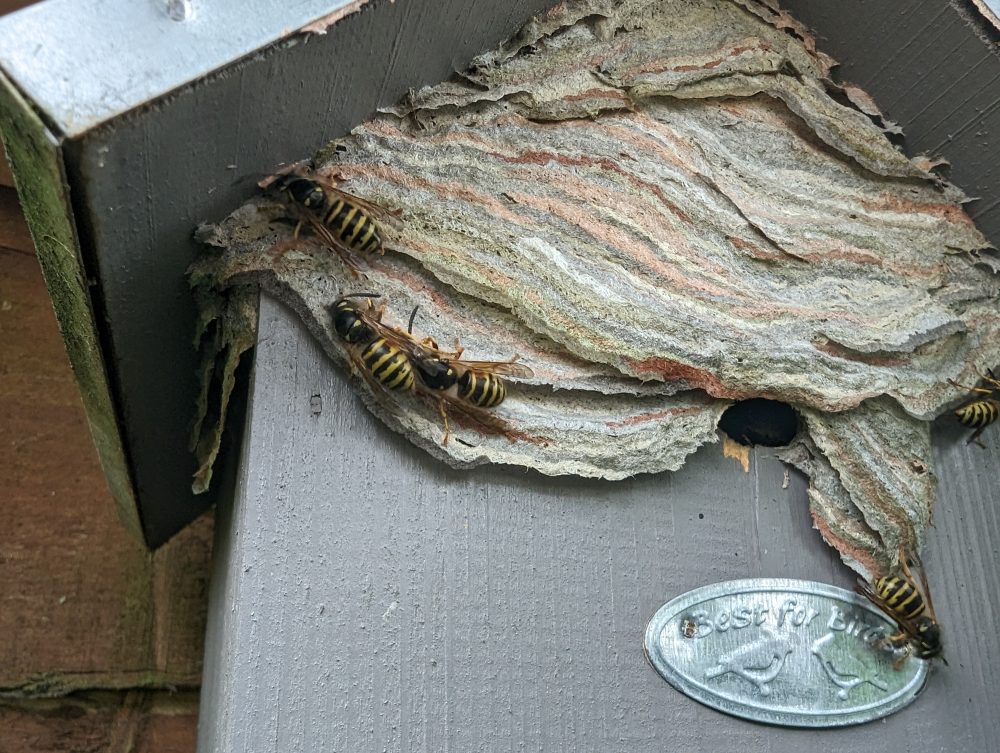
Wasp Nest Safety: Why DIY Removal Can Be Risky
A mature wasp nest can contain thousands of workers, especially later in the summer when colonies are at their largest. Common wasp colonies can peak in late summer with several thousand workers, which is why disturbing an active nest can quickly become dangerous.
Even one sting can be serious for someone who is allergic to wasp venom. Estimates vary, but UK health sources report that systemic allergic reactions to bee and wasp stings affect a small minority of people. Symptoms such as difficulty breathing, dizziness, swelling of the face, mouth, throat or tongue, or feeling faint after a sting should be treated as urgent warning signs.
There is also a risk from multiple stings. Medical references note that large numbers of stings can become dangerous even for people who are not allergic, because of the amount of venom involved. This is one reason we strongly advise against knocking down, blocking or disturbing an active nest yourself.
DIY sprays, expanding foam or attempts to block the entrance do not always reach the nest properly. They can also agitate the colony and cause wasps to find another way out, including into lofts, bedrooms, bathrooms or living areas.
Professional treatment reduces the risk because the nest location, access point and level of activity are assessed before treatment. Wallace Pest Control uses appropriate protective equipment, professional treatment methods and safe working practices to treat the nest with as little disturbance as possible.
If someone has been stung and develops serious symptoms, seek urgent medical help. If you have an active wasp nest at your home or business, call Wallace Pest Control on 07496 680879 for advice.
Which Wasp Service Do You Need?
Not every wasp enquiry needs the same service. In most cases, customers need treatment for an active nest. In other situations, the nest may already be inactive, or the main issue may be identifying whether the insects are actually wasps.
- Active wasp nest treatment: suitable when wasps are regularly entering and leaving the same gap, roofline, shed, hedge, wall cavity or loft space.
- Inactive nest removal: suitable when treatment has already worked, the nest is accessible and there is a practical reason to remove it.
- Insect identification: useful when you are unsure whether you have wasps, bees, bumblebees or another insect species.
If you are not sure which service you need, call Wallace Pest Control on 07496 680879. We can talk through what you are seeing and advise on the most suitable next step.
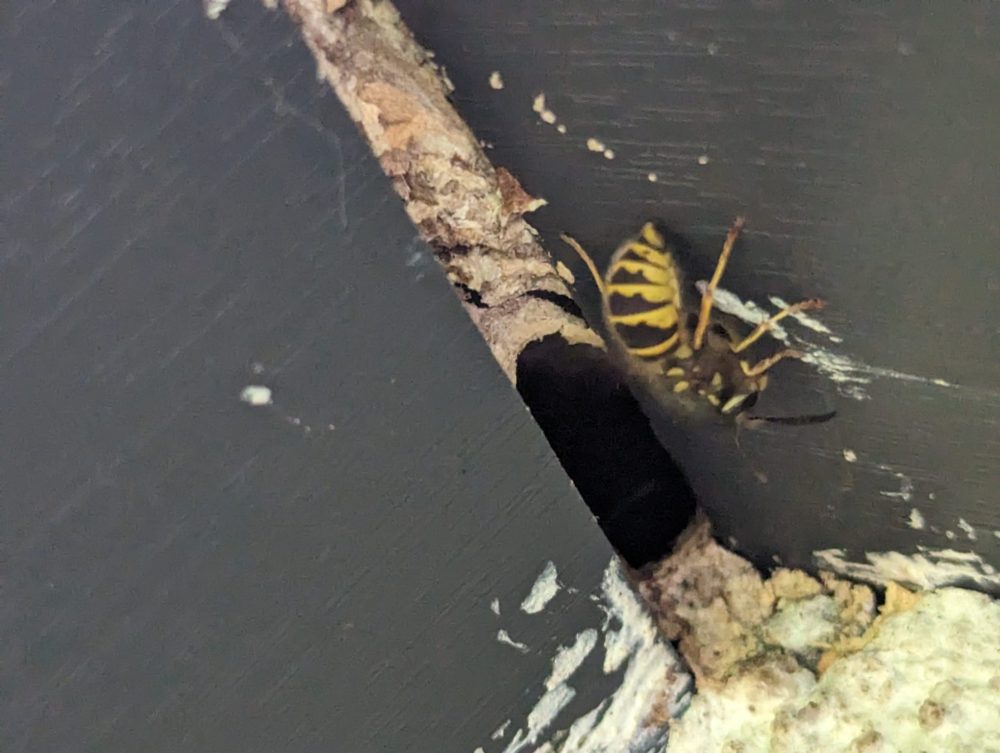
Why DIY Wasp Nest Treatments Can Make the Problem Worse
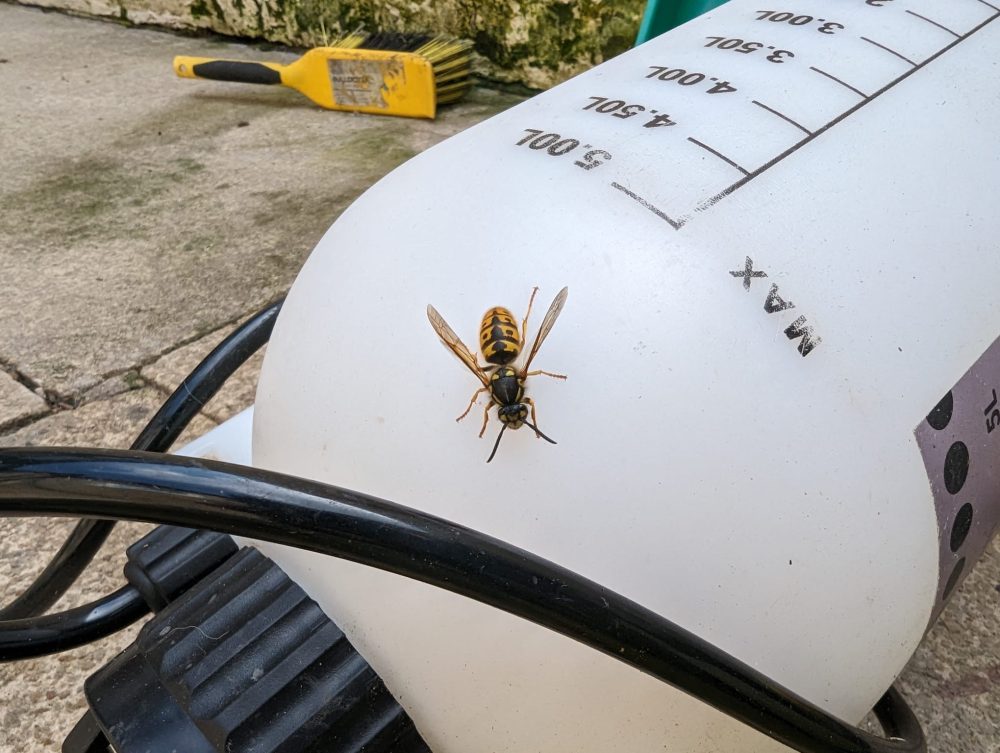
DIY wasp nest treatments can seem like a cheaper option, but they often create more problems than they solve. Sprays, foams and attempts to block the nest entrance may only affect the wasps you can see, while the main nest remains active.
If the entrance is blocked or the nest is disturbed, wasps may look for another way out. In some cases, this can push activity into lofts, wall cavities, bedrooms, bathrooms or living areas, making the situation more stressful and more difficult to manage.
There is also a safety risk. Active nests can contain large numbers of wasps, especially later in the summer, and disturbing them can quickly increase the chance of stings. This is particularly important where nests are close to loft hatches, windows, doorways, gardens, businesses or areas used by children, pets, staff or customers.
Professional wasp nest treatment is designed to assess the nest location, treat it using suitable equipment and reduce unnecessary disturbance. For most standard active nests, Wallace Pest Control charges £90, including a free retreatment if the nest is still active after 48 hours.
If you are tempted to treat a nest yourself, it is usually safer to call for advice first. Contact Wallace Pest Control on 07496 680879 or visit our wasp nest removal page for more information.

Why Wasp Identification Matters
Common Wasps and German Wasps
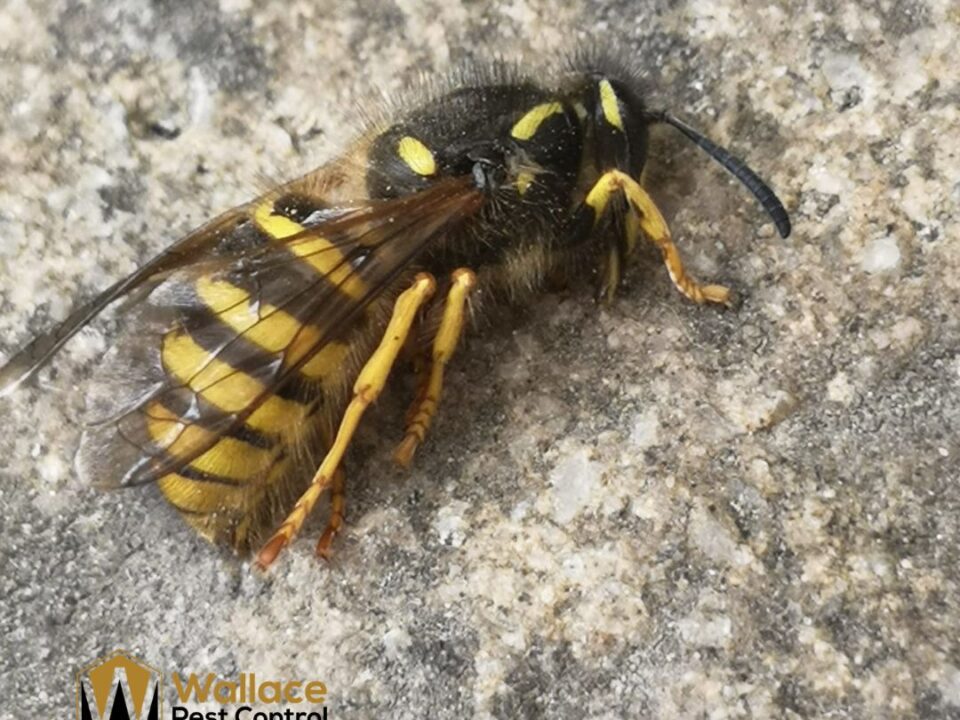
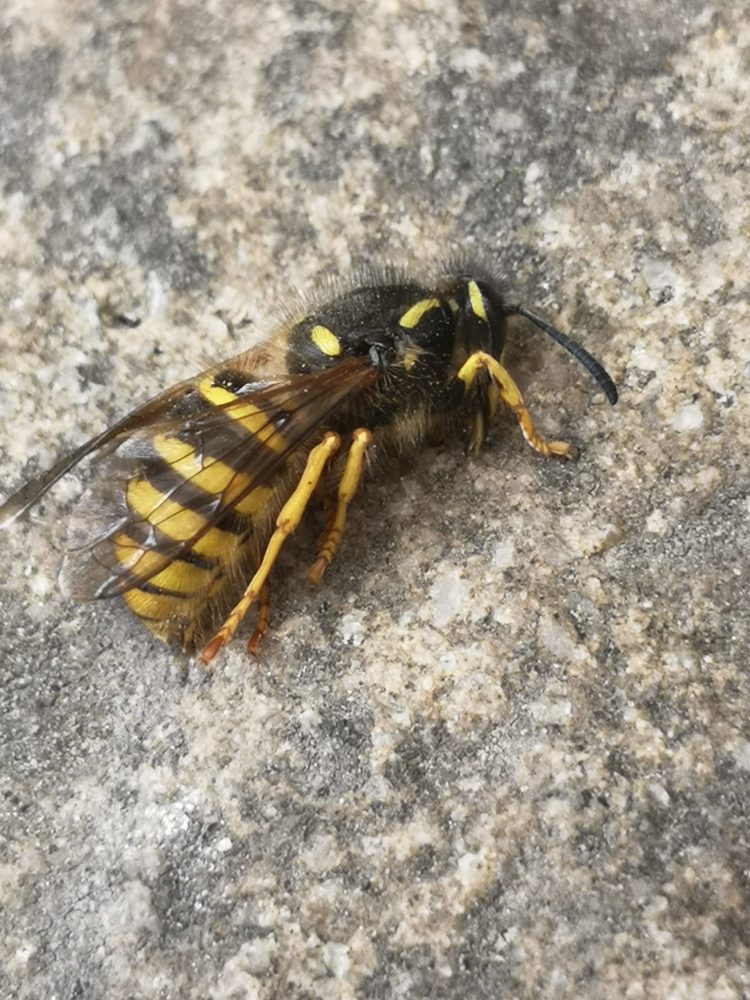
Most wasp nest treatments we carry out involve the common wasp (Vespula vulgaris) or the German wasp (Vespula germanica). These are two of the main social wasp species found around homes, gardens, lofts, wall cavities, sheds and outbuildings in the UK.
They can look very similar at first glance, but small differences in markings, nesting behaviour and activity levels can help with identification. Correct identification is important because bees, bumblebees, solitary wasps and social wasps should not all be treated in the same way.
If you are unsure whether you have wasps, bees or another insect, Wallace Pest Control can help identify the problem before recommending treatment.
| Trait | V. vulgaris Common Wasp |
V. germanica German Wasp |
|---|---|---|
| Face markings | Often has a dark, anchor-like marking on the face plate. | Often has three small black dots on the face plate. |
| Common nest locations | Lofts, wall cavities, roof spaces, sheds and other dark voids. | Lofts, wall cavities, compost heaps, outbuildings, bird boxes and sheltered spaces. |
| Typical behaviour | Can become very active around food, bins and outdoor eating areas later in the season. | Also food-driven and commonly seen around properties, gardens and waste areas. |
You do not need to identify the species yourself before calling us. If wasps are regularly entering and leaving the same gap, roofline, loft, shed, hedge or wall cavity, it is sensible to get professional advice before disturbing the area.
For help identifying a pest, visit our pest identification page or call 07496 680879.

When Are Wasp Nests Most Active?
Wasp activity in Lancashire usually starts to build during spring and becomes much more noticeable through summer. By late summer, nests can be at their busiest, which is when many homeowners and businesses start seeing regular wasp activity around rooflines, lofts, sheds, gardens, bins and outdoor seating areas.
The timing can vary depending on the weather, nest location and food sources nearby, but the pattern below gives a useful guide to what is normally happening during the wasp season.
If you are seeing wasps regularly entering and leaving the same area, it is better not to wait and see if the problem disappears. An active nest can become busier as the season progresses, and treatment is usually safer before the nest is disturbed.
For advice about an active wasp nest, call Wallace Pest Control on 07496 680879 or visit our wasp nest removal page.
|
Month |
Inside the Nest |
Outside the Nest |
|
March–April |
Overwintered queen ends diapause (insect hibernation) and chews wood pulp into a golf-ball starter nest. |
Lone queens scouting soffits and sheds. |
|
May–June |
First brood of workers (sterile females) emerges; nest growth accelerates via trophallaxis (mouth-to-mouth food exchange). |
Workers gather caterpillars and cellulose. |
|
July–August |
Peak size: 3 000–5 000 individuals; nest temperature hovers around 30 °C. |
Loft suitcases meet stinging militia; call-outs spike. |
|
September |
The queen switches from fertilised to unfertilised eggs, producing males; wasps are haplodiploid (males hatch from unfertilised eggs). |
Workers turn sugar-mad as natural food dwindles. |
|
October–November |
New queens leave to mate and hibernate; the old queen dies, the colony collapses. |
Activity dies off after the first hard frost. |
Who Is Inside a Wasp Nest?
Understanding how a wasp nest works helps explain why activity can increase so quickly during the summer. A nest is not just a few wasps coming and going — it is an organised colony with different roles inside.
- Queen wasp: the queen starts the nest and lays the eggs. Early in the season she builds and forages herself, but once the first workers emerge, her main role is egg laying. At peak activity, a queen can lay hundreds of eggs per day.
- Worker wasps: workers are sterile females that build the nest, feed the larvae, defend the colony and forage for food. As the colony grows, worker numbers increase, which is why wasp activity can suddenly become much more noticeable around a property.
- Drones: male wasps are produced later in the season. They do not sting and their role is to mate with new queens before the old colony naturally dies off.
This colony structure is one reason active wasp nests should not be disturbed. By the time a nest is busy around a loft, roofline, wall cavity, shed or garden, there may already be a large number of workers defending it.

Unusual Wasp Nest Locations We Have Found
Wasp nests are not always found in obvious places. While many are located in lofts, roof spaces, sheds, wall cavities and hedges, we have also found active nests in more unusual and awkward locations.
Some of the more unusual wasp nest locations we have dealt with include:
- Inside the insulated side wall of a hot tub: wasps had chewed into the foam and created a hidden cavity before the owner noticed heavy activity around the spa.
- Inside a fibre-optic broadband cabinet: the nest had made the cabinet unsafe to open until the wasp activity was treated.
- In a Land Rover wheel arch: the vehicle had been parked for some time, giving wasps the opportunity to set up a nest in a sheltered space.
- Above a child’s garden playhouse roof: the nest was hidden in a warm internal void close to an area used by children.
These examples show why the location of a nest matters. A straightforward nest may be quick to treat, but hidden, awkward or sensitive locations can require extra care, different equipment or additional safety considerations.
If you are seeing wasps regularly entering and leaving the same place, avoid disturbing the area. Call Wallace Pest Control on 07496 680879 for advice.
Need Wasp Nest Removal?
If you have found a wasp nest or you are seeing wasps regularly entering and leaving the same area, do not try to block, knock down or disturb the nest yourself.
Wallace Pest Control provides professional wasp nest treatment across East Lancashire, Ribble Valley, Burnley, Blackburn, Hyndburn, Pendle, Rossendale and surrounding areas.
For advice or to arrange treatment, call or WhatsApp Wallace Pest Control on 07496 680879.
Our standard active wasp nest treatment is £90, with a free retreatment if the nest is still active after 48 hours.